
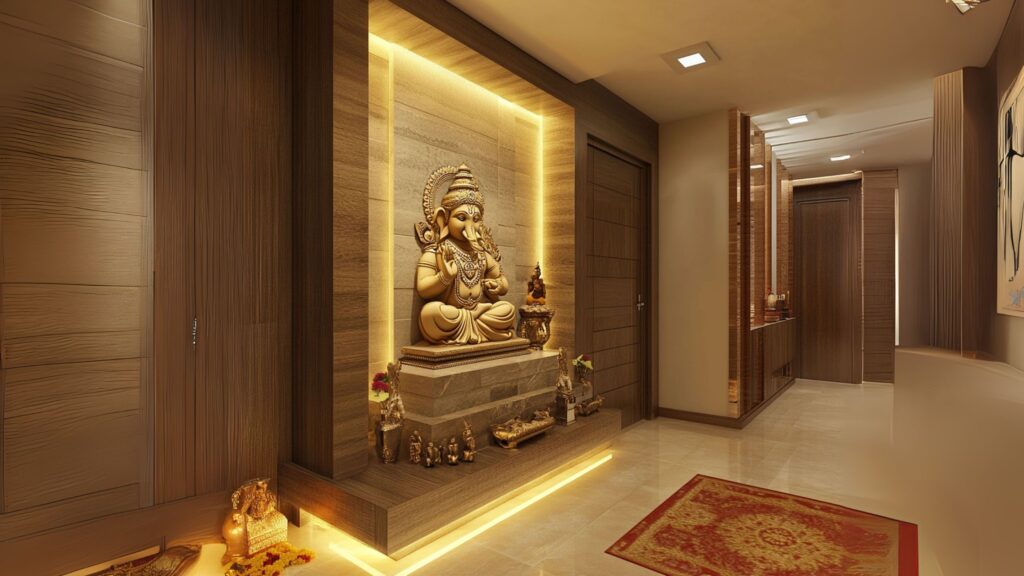
The pooja room is one of the most sacred and peaceful areas in any Indian home. It’s where prayers are offered, festivals are celebrated, and spiritual energy flows. Designing a pooja room with care and intention is not just about aesthetics — it’s also about ensuring positive energy and harmony.
According to Vastu Shastra—an ancient Indian architectural science—there are certain rules and guidelines for designing a pooja room to attract peace, prosperity, and divine blessings.
In this blog, we will explore Vastu tips for pooja room interior design to help you create a space that’s not only beautiful but also spiritually uplifting.
1. Best Direction for the Pooja Room interior design
The location of the pooja room in the house is very important in Vastu.
- Ideal Direction: The northeast corner of the home (called Ishan Kon) is considered the most auspicious. It’s believed to bring positive energy and mental clarity.
- Alternative Directions: If northeast is not available, the east or north directions are the next best options.
- Avoid: Do not place the pooja room in the south, southwest, or basement, as these directions are considered inauspicious for spiritual activities.
2. Placement of the Idols or Images
How and where you place your deities inside the pooja room matters according to Vastu.
- Facing Direction: Idols or photos of gods should face east or west, and when praying, you should ideally face east.
- Height from Floor: Keep idols at least 6 inches above the floor, but not too high. Avoid placing them directly on the ground.
- Distance from Wall: Idols should not be touching the wall. Leave some space behind for air and energy flow.
- Size of Idols: Prefer small to medium-sized idols. Avoid overly large or massive statues at home.
3. Pooja Room Door and Entrance
The entrance of the pooja room should reflect purity and positivity.
- Door Material: Use wooden doors, preferably with two shutters.
- Design: You can carve sacred symbols like Om, Swastik, or lotus on the door for a traditional look.
- Curtains: If there’s no door, at least use a light curtain to maintain the sacred boundary of the space.
4. Ideal Materials and Colors
Colors and materials can influence the mood and energy of the pooja room.
Best Materials:
- Marble or wood is ideal for pooja room structures, platforms, or flooring.
- Avoid using glass or metal as the main base or platform for idols.
Best Colors:
- Light and calming shades like:
- White
- Cream
- Light yellow
- Beige
- Pale pink
- Avoid dark or bold shades like black, dark red, or navy blue.
These soothing colors help create a peaceful and focused atmosphere for prayer and meditation
5. Lighting in the Pooja Room
Lighting is not just for visibility—it also sets the spiritual tone.
- Use soft yellow or warm white lights to create a peaceful environment.
- Natural Light: If possible, design the pooja room with a small window for natural light and ventilation.
- Use diyas (lamps) and candles during prayer rituals, as fire represents purity.
- Avoid using overly bright or colored LED lights that may disturb the spiritual mood.
6. Storage in the Pooja Room
Storage is necessary for pooja materials like incense, oil, lamps, books, etc., but it should be neat and well-planned.
- Build cabinets or drawers below the idol platform to store essentials.
- Keep the storage clutter-free and clean at all times.
- Avoid placing unnecessary items or unrelated things (like keys, documents) inside the pooja space.
7. Flooring and Ceiling Design
Even the floor and ceiling design can influence the energy of your pooja room.
- Flooring: White marble or wooden flooring is considered ideal. It should be clean and smooth.
- Ceiling Height: A normal ceiling height is okay, but avoid placing idols directly under beams or staircases.
- You can add a small false ceiling with indirect lighting for a soft glow.
8. Things to Avoid in the Pooja Room (Vastu Don’ts)
To maintain the sanctity of the space, follow these important Vastu don’ts:
- No Bathroom Nearby: Do not place the pooja room next to or under a bathroom.
- No Bedroom Pooja Setup: Avoid placing the pooja room inside or right next to the bedroom.
- No Broken Idols: Never keep cracked or broken idols or torn pictures of gods.
- No Storage Overhead: Avoid placing heavy storage or lofts directly above the idol or the platform.
- No Shared Wall with Toilet: The pooja room should not share a wall with a washroom.
9. Decoration and Accessories
Decor plays an important role in creating a divine and inviting pooja space.
- Decorate with fresh flowers, incense sticks, and brass bells.
- You can hang spiritual paintings like a lotus, Om, or other divine symbols.
- Place a small water pot (kalash) or copper vessel filled with clean water.
- Keep the space minimal — avoid turning it into a storage room or overcrowding with too many idols or items.
10. Daily Maintenance and Energy Cleansing
A clean and organized pooja room attracts positive energy.
- Clean the space daily — wipe idols, change flowers, and sweep the floor.
- Light a lamp (diya) or incense stick every morning and evening.
- Keep the atmosphere quiet and calm — avoid noise or loud music near the pooja space.
- Perform regular energy cleansing using camphor, guggal, or dhoop.
Conclusion
Designing a pooja room is not just about aesthetics — it’s about creating a sacred corner in your home where you feel peaceful and connected. By following Vastu tips for pooja room interior design, you can ensure that the space is filled with positive vibrations, divine energy, and spiritual harmony.
Whether your home is big or small, a well-designed pooja room based on Vastu can bring balance and blessings into your life. With the right direction, layout, materials, and colors, your pooja space can become the most tranquil and sacred part of your home. Transform your living space with the Best home interior designer in Hyderabad, bringing style, comfort, and elegance to every corner of your home.